
Why does a tape measure hook slide back and forth?
- Layout
- Accuracy
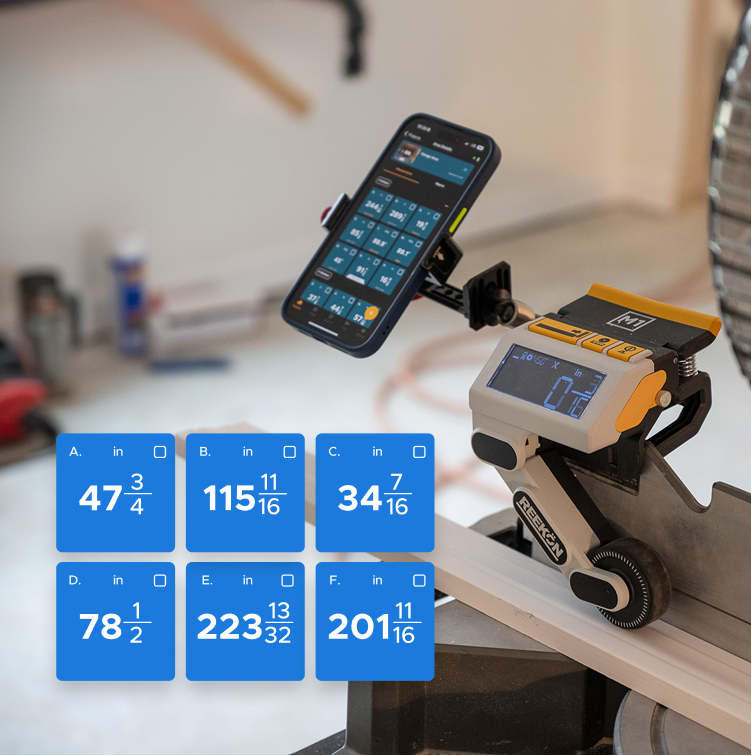
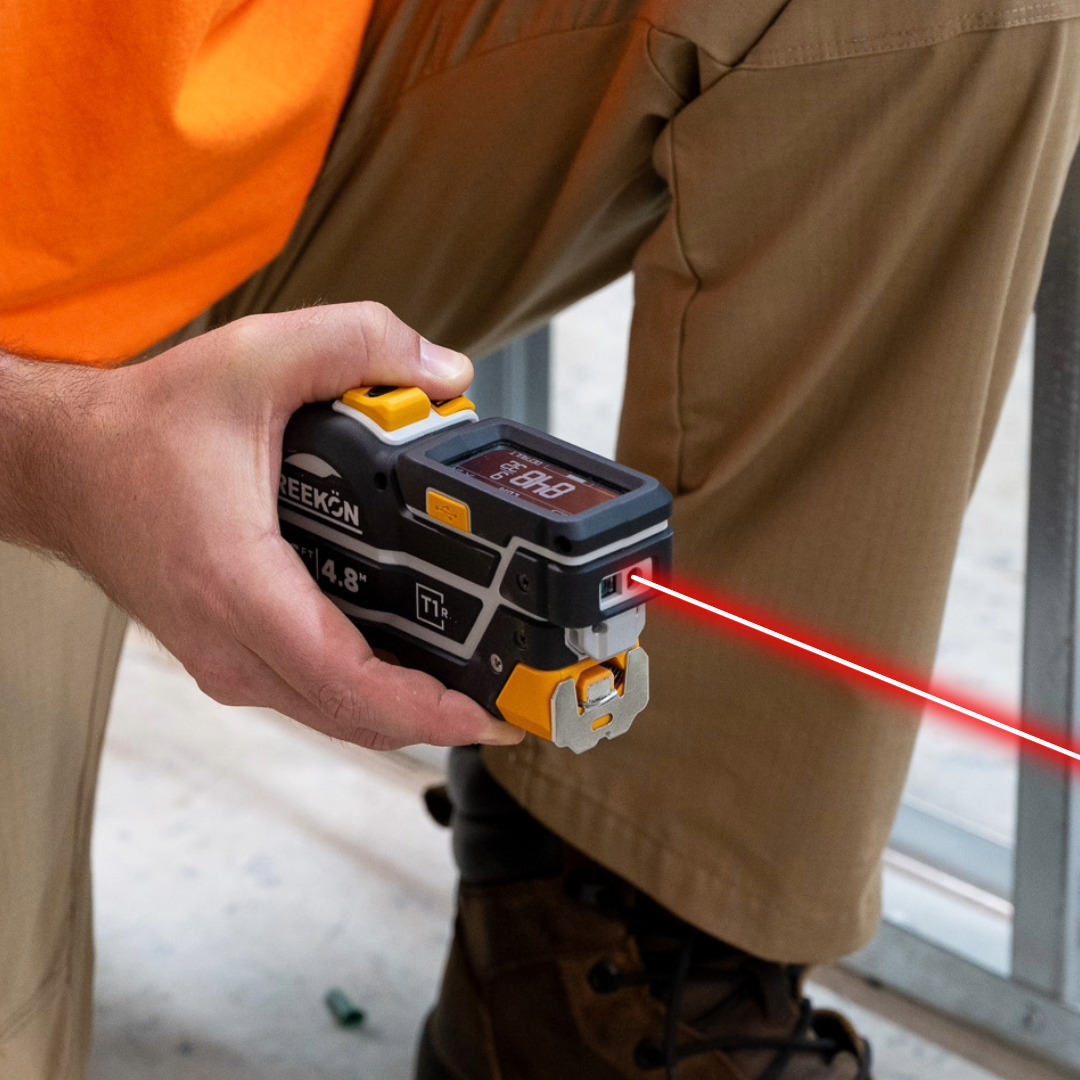
That loose hook is deliberate, and knowing why it moves is the difference between a joint that closes and one that shows. The float equals the hook's own thickness, so an outside pull reads off the inside edge and an inside push reads off the outside edge. The T1 Tomahawk keeps that compensation honest by reading the blade itself rather than a printed scale, and its relative mode zeroes anywhere the hook cannot reach. The number is captured where you took it, not copied down after.
What the moving hook is actually for
- Hook float equals the hook's own thickness
- Tension pulls, compression pushes, both true
- Caliper shows about a tenth of an inch
- T1 reads the blade, not a printed scale
- T1 relative mode zeroes where a hook cannot
The video puts a caliper on the hooks of several tapes and shows the travel is about a tenth of an inch, which is the thickness of the hook. Pulled outward the blade is in tension and the reading comes off the inside edge; pushed into an opening it is in compression and the reading comes off the outside edge. Same hook, two references, and that is why it was never meant to be tight.
proven favorites
Best Selling Tools
SHOP ALL
BOLDR PRO SOFTWARE
Practical Tools For Every Part Of The Job
Capture measurements with REEKON tools, then use them where the work happens.
100,000+ Customers
Get Started Today
Get more done and reduce errors immediately with REEKON digital measuring tools. Try today risk-free for 30 days and see for yourself.
Reduce Costly Errors
Standardize Workflows
Enter Into Any Software
SHOP NOW